

Quick answer
Reykjavik can display the northern lights when geomagnetic activity is strong (KP 3 or above) and skies are clear between 21:00 and 23:59, the hours when darkness is complete. However, streetlights and building glow reduce contrast, meaning fainter auroras visible in countryside darkness may not register above the city's ambient light. Remote Super Jeep tours move beyond the urban light dome to areas where even moderate aurora activity appears vivid against a truly dark sky.
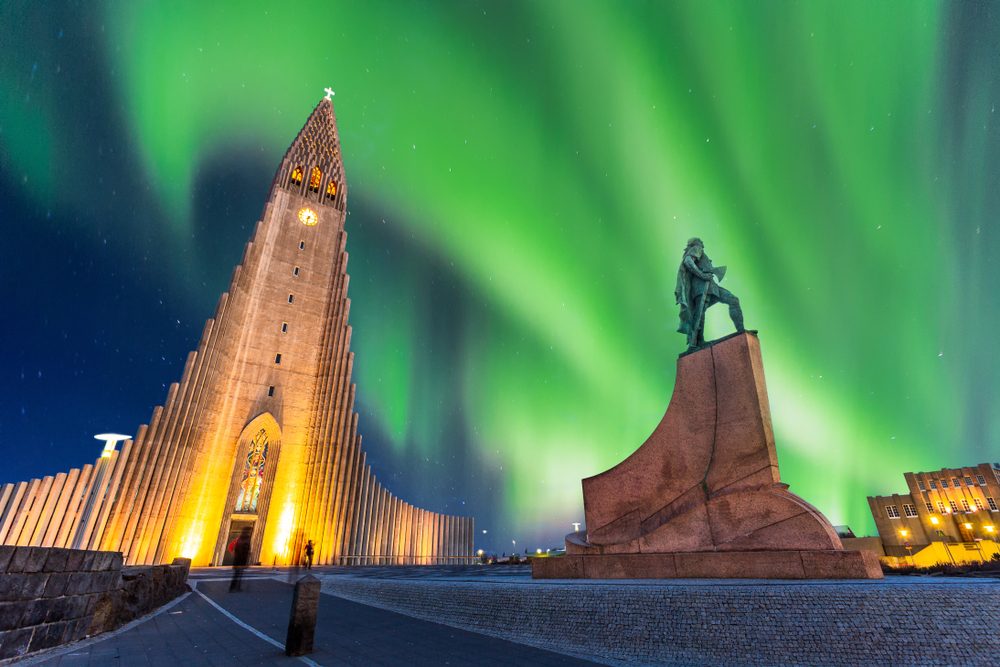
The Reykjavik metropolitan area generates a light dome visible from orbit, and that glow directly competes with auroral photons reaching the ground. On nights when the KP index climbs to 4 or 5, the aurora brightens enough to overcome streetlight wash, and green curtains appear over Perlan, the harbor, and residential streets. Visitors standing at Grótta lighthouse or along the coastal path at Seltjarnarnes report clear sightings during such episodes. But when geomagnetic activity hovers at KP 2 or 3, the same aurora that paints the sky 30 kilometers inland fades into Reykjavik's ambient glow, leaving the city under what appears to be empty darkness. Super Jeep excursions drive beyond the M1 ring road into regions where no municipal lighting exists, and the difference in baseline sky brightness is measurable. Tour operators monitor real-time aurora forecasts and cloud cover, repositioning groups to openings in the weather. This mobility matters: Iceland's maritime climate produces patchy cloud fields that can obscure the aurora over Reykjavik while leaving inland valleys clear. The jeeps also reach higher elevations where atmospheric moisture is lower, reducing the haze that scatters city light. Northern lights viewing from Reykjavik is viable, but it demands stronger geomagnetic conditions than countryside observation. Travelers on tight schedules or those arriving during solar minimum phases—when KP rarely exceeds 2—face long odds within city limits. Conversely, visitors with flexible itineraries and access to aurora apps can time short drives to Reykjavik's darker edges, splitting the difference between hotel convenience and rural sky quality. The choice hinges on solar activity, cloud patterns, and how much time remains after daylight activities end. Understanding Reykjavik's position as an auroral viewing site means recognizing it as a threshold location: capable under the right conditions, but never optimal. The capital offers immediate access when the aurora surges, but remote excursions remove the variables that turn marginal nights into missed opportunities. For first-time visitors prioritizing a sighting over convenience, departing the city improves the probability of witnessing vivid auroral displays across the full intensity spectrum.
“The same aurora that paints the sky 30 kilometers inland fades into Reykjavik's ambient glow, leaving the city under what appears to be empty darkness.”
The Best Time for Is Reykjavik a Good Place to See the Northern Lights Viewings?
The prime window for viewing the aurora borealis in Iceland spans from late September to late March, when extended periods of darkness provide the necessary contrast for visibility. While city viewing in Reykjavik offers convenience, remote super jeep excursions provide darker skies away from light pollution, significantly increasing the probability of sightings.
Late Sept–Oct
ModerateCool, 2°C to 7°C
The transition into darker months offers a balanced climate and frequent activity.
Nov–Jan
LowCold, -3°C to 3°C
Longest nights maximize observation windows but require preparation for harsh winter conditions.
Feb–Late March
ModerateCold, -2°C to 4°C
Increasing daylight hours still allow for clear evening viewings before the season ends.
Verdict: The optimal opportunity occurs between November and January during the darkest nights, utilizing remote excursions to escape city light interference.
Operating Hours for Is Reykjavik a Good Place to See the Northern Lights Viewing
Reykjavik is a public city, providing constant access to outdoor viewing locations throughout the week.
| Monday | 00:00–23:59 | |
|---|---|---|
| Tuesday | 00:00–23:59 | |
| Wednesday | 00:00–23:59 | |
| Thursday | 00:00–23:59 | |
| Friday | 00:00–23:59 | |
| Saturday | 00:00–23:59 | |
| Sunday | 00:00–23:59 |
Admission Fees for Is Reykjavik a Good Place to See the Northern Lights Visits
Admission to view the Northern Lights within public spaces in Reykjavik requires no entry fee. This is distinct from private excursion services, which charge for transport and guide expertise.
A typical visitor pays 0 ISK for independent viewing, while costs for remote excursion tours depend on the selected private operator.
Checklist for When Is Reykjavik a Good Place to See the Northern Lights Excursions
Successful aurora viewing in Reykjavik requires preparation for cold conditions and active monitoring of forecast data.
-
Check the aurora forecast daily — The KP index and cloud cover determine visibility each night.
-
Download a dedicated aurora app — Real-time alerts help you catch sudden displays even from the city.
-
Dress in thermal layers and windproof outerwear — Temperatures drop significantly after dark, especially near the coast.
-
Bring a tripod and manual camera settings — Long exposures capture auroras invisible to the naked eye.
-
Scout dark spots away from streetlights — Even within Reykjavik, light pollution varies dramatically by neighborhood.
-
Allow 30–60 minutes for eyes to adjust — Full dark adaptation reveals fainter aurora structures.
-
Have a backup indoor plan — Cloud cover can obstruct viewing for consecutive nights.
Check availability
Common questions about seeing the Northern Lights in Reykjavik
Everything you need to know about is reykjavik a good place to see the northern lights